
Erie, PA · Garage Door Service
What We Actually Check When We Come Out
A real look at what we check on an Erie service call, why lake-effect cold hits original 1960s-70s hardware hardest, and when a call isn't worth it.
- Repairs & new doors
- Springs & openers
- Serving 8 nearby communities
What the Weather Here Does to It
Erie sits in a severe cold climate band, and that changes what breaks and when. Steel contracts in deep cold, and a torsion spring that's been winding and unwinding since the Carter administration loses tension faster once temperatures drop and stay down for weeks at a stretch. Most of the housing stock around here went up between 1938 and 1985, with the bulk from the 1960s and 70s, which means a lot of doors are still running on the hardware that came with the house. That hardware wasn't built for the duty cycle it's gotten over 50-plus winters. Cold also stiffens the lubricant in rollers and hinges, so a door that worked fine in September starts grinding, sagging on one side, or refusing to open past the halfway mark in January. On a call, we're not just looking at the symptom you called about - we're checking whether the spring, cable, and track are all still matched to each other, because on a door this old they often aren't anymore. One thing we won't do is tell you a full tune-up fixes a spring that's actually at the end of its life. If the coils have visible gaps or the door won't balance, that's a replacement conversation, not a lubrication one.
When Waiting Is Fine
Not every noise or stiff spot needs a same-week call. A door that's slightly louder than it used to be, or that hesitates for a second before the opener kicks in, is often just asking for lubricant on the rollers and hinges - something you can do yourself with a spray made for garage doors, not WD-40, which washes out what grease is already there. If the door still opens and closes evenly and the remote still works every time, you're probably fine to wait for a scheduled visit rather than an emergency one. Given the age of a lot of homes in this area, a yearly check before the cold really sets in catches most of what would otherwise turn into a stuck door in February. If nothing's binding and the door isn't sagging to one side when it's halfway up, you've got time.
What Is Going On
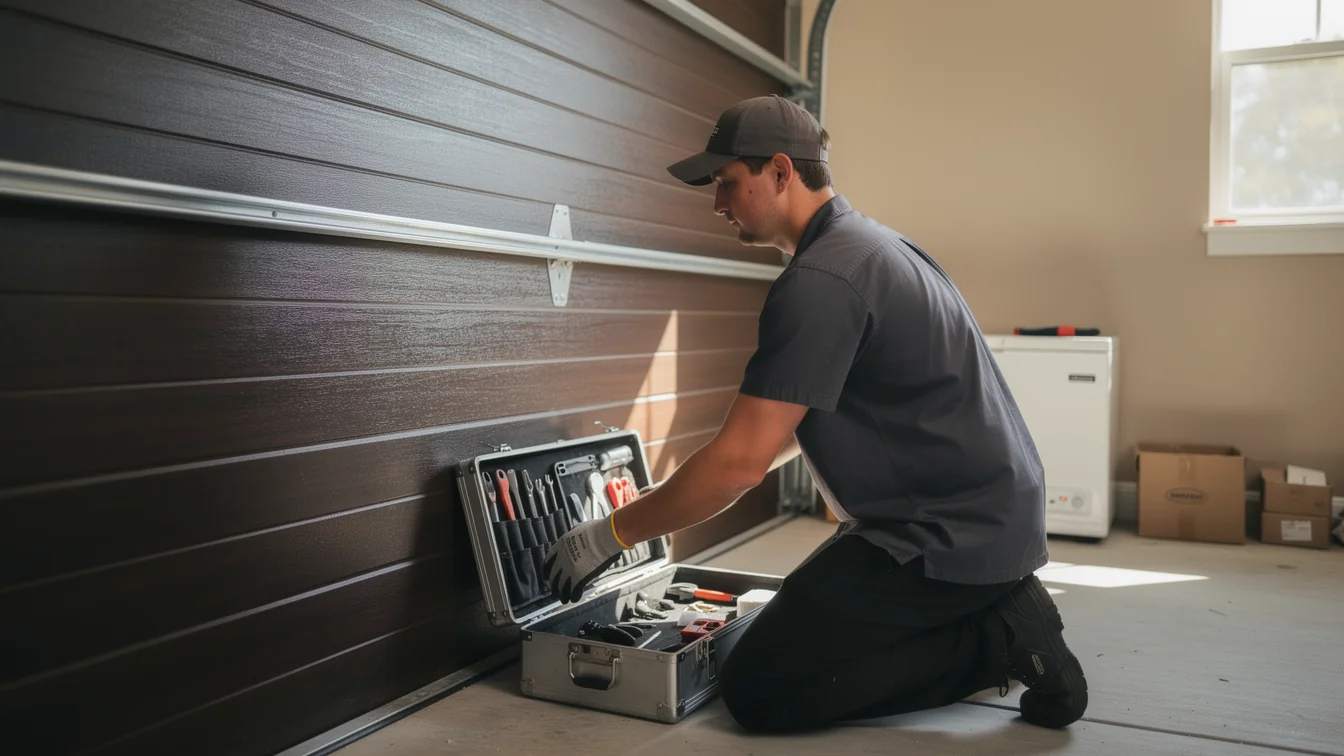
On a standard call we check four things regardless of what you phoned in about: spring tension and coil condition, cable wear at the drum, track alignment, and opener force settings. On a house built in the 1960s or 70s that's never had the springs replaced, we're also looking at whether the spring is even sized right for the door - a lot of original installs used whatever was standard at the time, not what the door actually needs now if panels or an opener were swapped in later. We'll tell you straight if what you're hearing is cosmetic - a loose bracket, a worn roller - or if it's a spring on its way out, because those two things sound similar from inside the house but aren't close in cost or urgency. We don't guess at spring life from a visual check alone; we look at coil spacing and test the balance by hand.
When to Call Someone
Call right away if the door comes down crooked, if you hear a loud bang followed by the door refusing to move, or if a cable has come off the drum - these are spring and cable failures, not something to keep opening and closing. Across the roughly 9,545 owner-occupied houses in this service area, a good share are still running original torsion hardware from the build era, and that hardware doesn't fail gradually most of the time - it fails at the coil, all at once. If your door is pulling to one side as it closes, stop using the opener and call, because that's uneven cable tension and it gets worse with every cycle. We serve homes from here out toward Lawrence Park and Northwest Harborcreek, and the same cold-weather spring wear shows up across that stretch. If your door is original to a house built before the mid-80s and you haven't had the spring looked at, that's worth a call even without a failure yet.
Frequently asked questions
Why does my garage door act up more in winter here than in summer?
Erie's winters sit in a severe cold climate band, and cold steel loses tension faster, especially in torsion springs that have been in service since the 1960s or 70s. Lubricant also stiffens in the cold, so rollers and hinges that were fine in warm months start dragging once temperatures drop and stay down.
Is my door's original hardware really still in the opener?
Given that most housing in the area was built between 1938 and 1985, with a lot from the 1960s and 70s, it's common. If the door has never had a spring or cable replacement, what's up there now is likely original to the house, which matters because that hardware is well past the point most springs are rated for.
Do you service areas outside Erie proper?
We cover the surrounding area including Lawrence Park, Northwest Harborcreek, and out toward McKean and Fairview. The same housing-era and climate issues that show up in Erie show up across that stretch, since the building stock and winters are shared.
How do I know if it's a quick fix or a bigger job?
If the door still opens evenly, closes flush, and the remote works every time, it's likely a lubrication or minor adjustment issue. If it's sagging to one side, banging, or a cable's come off the drum, stop using it and call - those point to spring or cable failure, not something that gets better on its own.
Related garage door services in Erie
More garage door guides
Book garage door service in Erie
Call now or request a quote - tell us what the door is doing and where you are.