
Erie, PA · Garage Door Service
Living in Erie's Older Housing: What the Garage Door Has to Handle
Erie's housing stock dates mostly to 1938-1985, built before modern insulation and weatherstripping codes. Here's what that means for your garage door.
- Repairs & new doors
- Springs & openers
- Serving 8 nearby communities
What the Weather Here Does to It
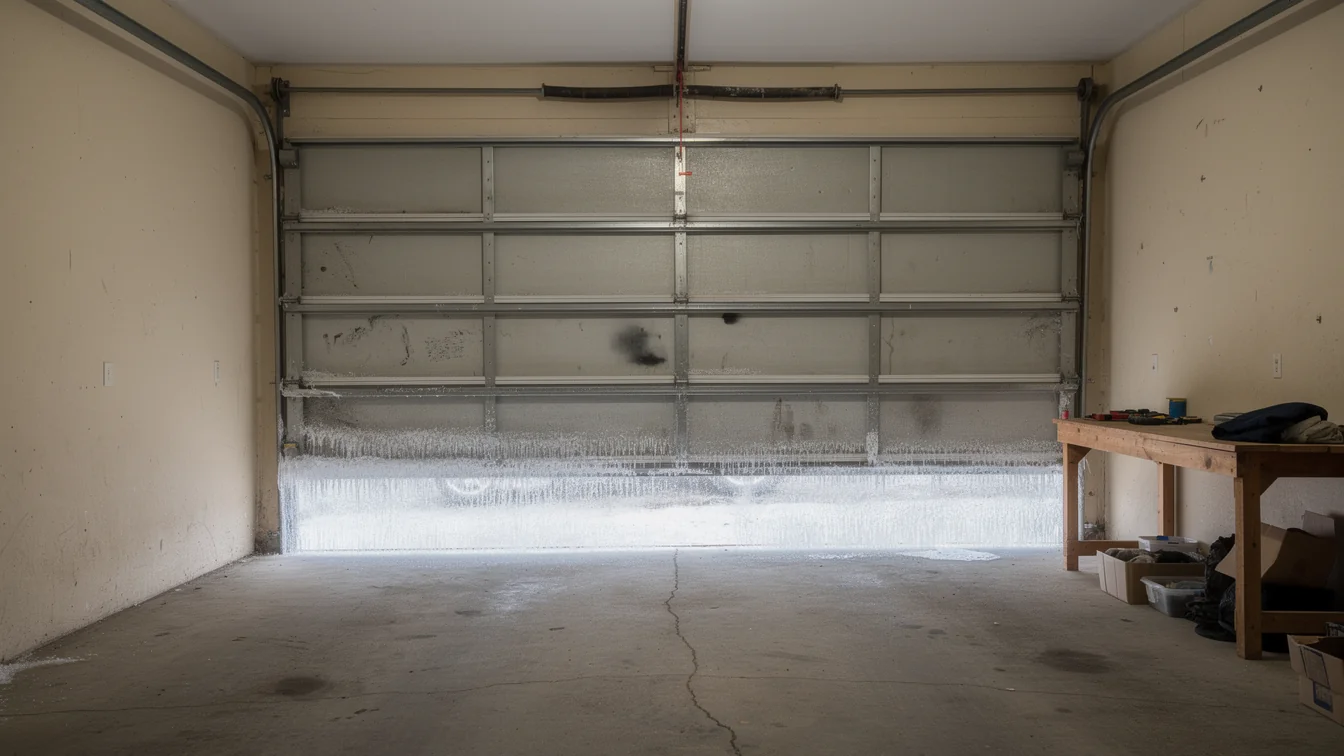
Erie sits in a climate band the federal data marks as cold and severe, and most of the garage doors we work on sit in houses built between 1938 and 1985, with the median landing around 1971. That matters more than people think. A door built in that era was made to keep rain and squirrels out, not to hold a thermal break or a tight bottom seal against a real freeze-thaw cycle. Steel panels from that period are often a single layer with no foam core, so they flex in the cold and the seams open up a hair-width gap that lets wind straight through.
Across the service area - Lawrence Park and Northwest Harborcreek close in, out to McKean, Fairview, and the other named communities - the housing clusters in that same 1960s-70s band. The symptom shows up the same way almost everywhere: the door looks fine in August and then in January it won't seal at the bottom corners, the track pulls slightly out of square because the wood jamb behind it has shrunk and swelled for fifty winters, and the opener strains because the cold has stiffened the grease in the old rollers. None of that is a defect. It's just what happens to a door this old in a climate this hard on it.
When Waiting Is Fine
Not everything on an old door is an emergency. A dent in a steel panel from a stray basketball doesn't affect the spring, the track, or the seal, and cosmetic damage like that can sit for years without costing you anything but pride. Same with a little surface rust on hardware that still moves freely - sand it, hit it with a rattle-can touch-up, and move on.
A door that's slightly noisier in the cold than it is in summer is also not urgent on its own. Steel contracts, lubricant thickens, and a door built in 1965 or 1971 is going to sound different at 10 degrees than it does at 70. If it still opens, closes, and reverses on contact the way it's supposed to, that noise is a maintenance item, not a breakdown.
We'll say plainly: we'd rather you wait on a cosmetic issue and save the call for something that actually needs a truck out. A dent doesn't need us. A door that won't seat square in its track does.
What Is Going On
Most of what we see traces back to the same root cause: the door, the track, or the opener was built or installed before anyone expected a house to meet current insulation standards. Houses from the 1938-1985 window in this area were framed and finished to the code of their decade, and garage doors from that same stretch weren't rated for thermal performance at all - that requirement came later. So you end up with a steel slab or an old wood panel door hung on hardware sized for a lighter cold-climate load than what we actually get.
The weatherstripping on these doors is usually the first thing to fail, because rubber and vinyl from an older build don't hold up fifty-plus winters the way the steel does. Once that seal goes, cold air finds the gap, and homeowners often read that as 'the door is broken' when really it's one $20 part. The springs are the other common failure point - a torsion spring sized decades ago for a lighter, uninsulated door panel works harder than it should once someone's swapped in a heavier insulated replacement panel without rebalancing the system.
When to Call Someone
Call when the door won't stay in its track - on a house this age, that's almost always the track pulling away from a jamb that's moved with the seasons, and it's not a DIY fix. Call when a spring snaps; on a door built to 1960s-70s spec, the cable and drum setup is original equipment in a lot of houses, and we don't recommend anyone touch a loaded torsion spring themselves, old door or new.
Call if the opener is straining and groaning hard in winter cold rather than just running a little slower. That's usually a sign the door itself has gotten heavier to lift than the opener's motor was ever sized for, often because panels have absorbed moisture over the decades or because someone replaced one section with a heavier modern panel and never rebalanced the spring.
One honest note: if the door is original to a house built in the 1940s or 50s, full replacement is often the better call than another repair. Parts for doors that old are getting harder to source, and we'd rather tell you that up front than keep patching something that's reached the end of what patching can do.
Frequently asked questions
Why does my garage door only act up in winter?
Because it was built before insulation rules existed, so there's no thermal break and often thin or original weatherstripping. Steel contracts in cold, gaps open at the seams, and springs sized for a 1960s-70s door panel work harder once the metal stiffens up. It's a predictable pattern on housing stock from this era, not a sign something's wrong with your specific door.
Is it worth insulating an old garage door instead of replacing it?
Sometimes. If the panels and track are sound and just under-sealed, adding weatherstripping and a bottom seal can help a lot for little cost. If the steel itself is original to a house built in the 1938-1985 window and already flexing or rusted through, insulation kits won't fix a structural problem - that's a replacement conversation.
How common are these old-door problems around here?
Very. The service area runs about 9,545 owner-occupied houses, and most of that stock dates to the 1938-1985 period with a median build year around 1971. Pre-insulation doors and weatherstripping on houses that age are the norm here, not the exception.
Related garage door services in Erie
More garage door guides
Book garage door service in Erie
Call now or request a quote - tell us what the door is doing and where you are.